The Core Promise: Unprecedented Accuracy and Efficiency
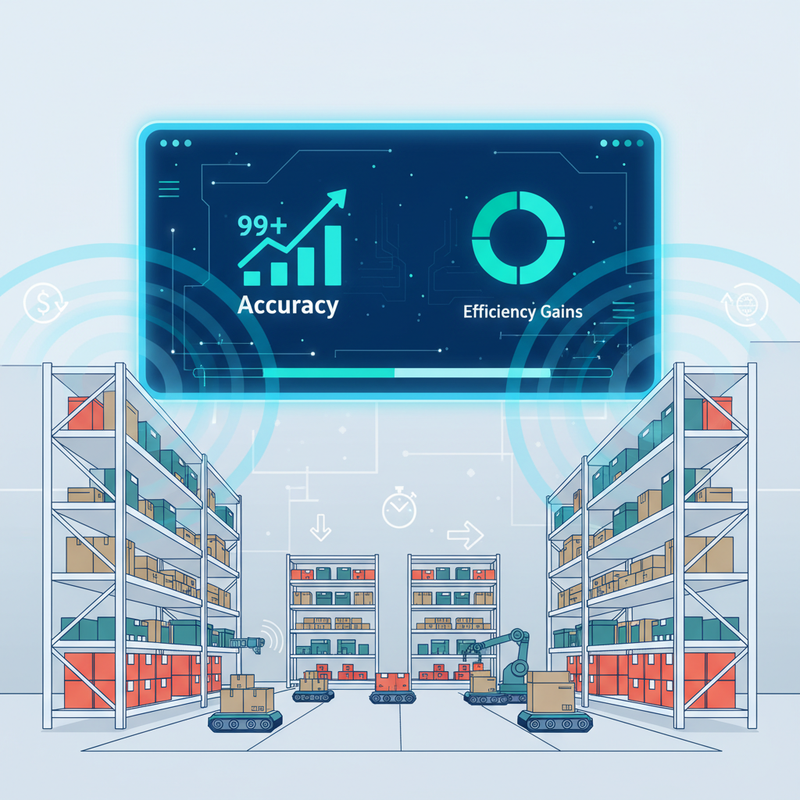
In today's fast-paced supply chains, traditional manual inventory methods are often insufficient, prone to error, and disruptive to operations. UHF RFID offers a paradigm shift by providing near real-time, item-level tracking that transforms warehouse management.
Unmatched Accuracy and Visibility
UHF RFID provides a level of detail that goes far beyond traditional batch tracking.
- Accuracy Rates: Consistently reported above 99%, significantly improving Inventory Record Accuracy (IRA).
- Granular Tracking: Enables the identification of the exact location and quantity of every individual item, not just the general batch.
- Order Fulfillment: High accuracy levels directly enhance the Perfect Order Rate, ensuring customers receive exactly what they ordered.
Transformative Efficiency and Automation
The automation provided by RFID technology eliminates the bottlenecks associated with manual barcode scanning.
- Automated Scanning: Utilizes fixed readers at dock doors, handheld devices, or autonomous robots and drones to capture data instantly.
- Time Savings: Full inventory audits that previously took teams several days can now be completed in a fraction of the time.
- Operational Continuity: Inventory checks can often be performed without halting daily operations or closing sections of the warehouse.
- Labor Allocation: Reduces the need for manual counting, freeing staff to focus on higher-value tasks and substantially cutting labor costs.
Operational Resilience
Real-time data leads to smarter business decisions and a more secure supply chain.
- Stock Optimization: Provides a clear picture of stock levels to prevent both stockouts and overstocking, leading to more informed purchasing.
- Loss Prevention: Enhanced tracking minimizes shrinkage caused by misplacement or theft.
- Streamlined Logistics: Accelerates critical tasks such as receiving, put-away, and shipping verification.
How UHF RFID Works: The Technical Edge
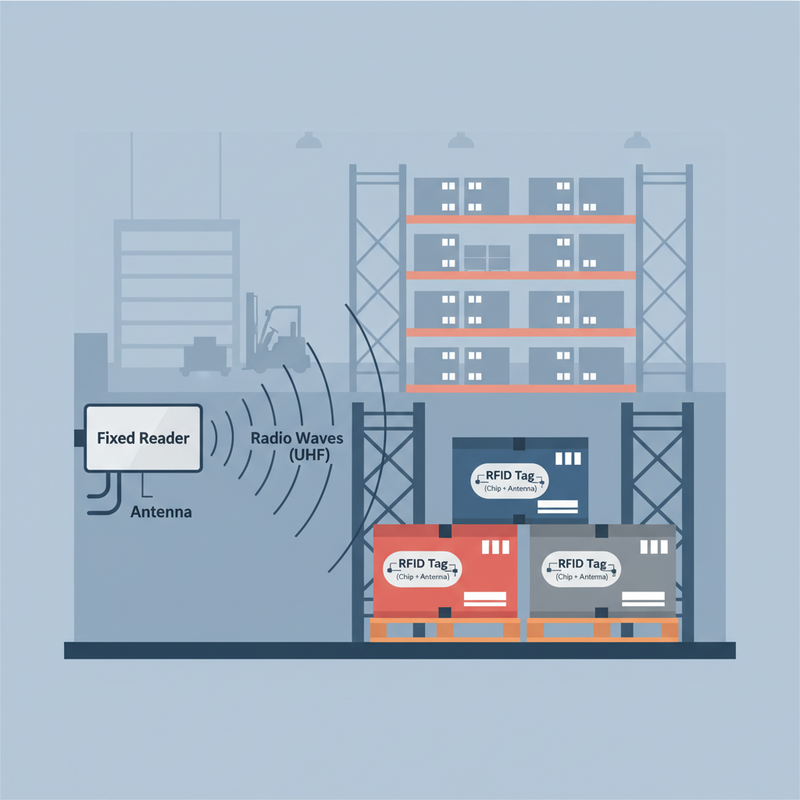
Understanding the fundamental components of UHF RFID is essential for grasping how it transforms warehouse environments. Its ability to read multiple tags simultaneously (bulk reading) over several meters makes it the predominant technology in modern logistics.
Core Components of an RFID System
- RFID Tags: These small devices consist of a microchip for storing unique identifiers—such as an Electronic Product Code (EPC)—and an antenna.
- Passive Tags: Cost-effective and most common; they draw power directly from the reader’s radio waves.
- Active Tags: Feature an internal power source for longer read ranges and continuous data transmission, ideal for high-value asset tracking.
- RFID Readers: Devices that emit radio waves to activate tags and capture data.
- Fixed Readers: Positioned at dock doors or conveyor belts to automatically track items at critical choke points.
- Handheld Readers: Provide mobility for manual inventory checks, locating specific items, or quick cycle counts.
- Integrated Readers: Mounted on forklifts, robots, or drones to automate large-scale scanning across vast areas.
- Antennas: These facilitate the communication between readers and tags. The choice between linear or circular polarization depends on whether a narrow beam or wide, omni-directional coverage is needed.
Data Processing and Integration
Raw data collected by readers requires a sophisticated software layer to become useful business intelligence:
- RFID Middleware: Filters duplicate reads and interprets tag IDs (such as serialized global trade item numbers). Scalability and resiliency is the key to getting the very best out of an RFID infrastructure.
- System Integration: Seamlessly connects inventory data with Warehouse Management Systems (WMS) and Enterprise Resource Planning (ERP) platforms.
- Standardization: Adherence to ISO 18000-6C and GS1 EPCglobal standards ensures that hardware and software from different vendors work together reliably.
Key Benefits in Logistics
The synergy of these components results in a unified view of stock that traditional methods cannot match:
- Rapid Read Speeds: Processes hundreds of items in seconds.
- Automated Accuracy: Reduces human error by removing manual data entry from the receiving and shipping process.
- Actionable Insights: Transforms raw tag reads into meaningful inventory events for better decision-making.
Real-World Impact: Diverse Applications Across the Warehouse
The versatility of RFID technology allows it to be applied across every facet of warehouse operations, delivering tangible benefits that directly impact the bottom line through enhanced efficiency and accuracy.
Real-Time Inventory Tracking: From Dock to Ship
- Receiving: RFID portals at dock doors automatically record incoming items, verifying shipments against purchase orders in seconds. This significantly reduces manual barcode scanning and eliminates receiving errors.
- Put-away: Real-time visibility of available space guides staff or autonomous robots to optimal storage locations, ensuring efficient space utilization and faster retrieval.
- Picking & Packing: RFID enables accurate item verification during picking to minimize errors. Automated packing stations confirm all items are present before sealing, preventing mis-shipments and costly chargebacks.
- Shipping: Automated outbound verification ensures the correct items and quantities are loaded onto trucks, drastically improving customer satisfaction and reducing shipping errors.
Operational Efficiency & Audit Control
- Cycle Counting & Audits: RFID revolutionizes inventory counts. Handheld readers can complete counts in minutes, while drones can autonomously scan entire warehouses during off-hours, providing a complete inventory picture without disrupting operations.
- Returns Management: RFID expedites the processing of returned goods. Items are instantly identified and linked to original orders, streamlining quality checks and facilitating faster restocking.
Specialized Tracking & Resource Management
- Asset Tracking: Beyond inventory, RFID monitors high-value assets such as forklifts, specialized tools, and returnable transport items (RTIs). This prevents loss, reduces search times, and optimizes asset utilization.
- Work-in-Progress (WIP) Tracking: For warehouses involving assembly or manufacturing, RFID tags provide real-time visibility into production stages. This allows managers to identify bottlenecks, optimize flow, and maintain tight production schedules.

The Smart Warehouse: RFID's Synergistic Future
The true power of RFID is unleashed when it converges with other cutting-edge technologies, transforming static storage facilities into intelligent, autonomous "smart warehouses." This synergy creates dynamic, data-driven hubs capable of self-optimization.
Key Technological Synergies
- RFID with AMRs and Drones:
- Autonomous Mobile Robots (AMRs) and drones equipped with RFID readers can navigate aisles and high-reaching racks to perform continuous, automated inventory checks.
- This eliminates the need for human intervention in routine counts and reduces safety risks associated with accessing high shelves.
- Drones can conduct full warehouse scans overnight, feeding accurate data directly into the Warehouse Management System (WMS) by morning.
- RFID with IoT and AI:
- Integrating RFID with Internet of Things (IoT) sensors allows for environmental monitoring (temperature, humidity, vibration) alongside real-time inventory tracking.
- AI-powered analytics can identify goods nearing expiration by cross-referencing RFID receipt dates with IoT environmental data.
- AI can analyze movement data to identify bottlenecks and inefficient routes, suggesting layout improvements to optimize workflow.
- Machine Learning (ML) for Demand Forecasting:
- The granular data provided by RFID allows ML models to identify subtle patterns in item movement.
- These models achieve high accuracy in predicting future needs, which minimizes the risks of stockouts or overstocking and optimizes overall inventory levels.
Real-World Implementation
The holistic impact of these integrated systems is already visible in the industry:
- Global Success Stories: Companies like Decathlon have implemented RFID from manufacturing to retail, achieving over 99% inventory accuracy and realizing significant labor savings.
- Practical Application: Retailers and logistics providers are increasingly deploying RFID portals at receiving and shipping docks, complemented by handheld readers for on-floor verification, to ensure an unbroken chain of data.

Market Momentum: Growth, Drivers, and the Competitive Landscape
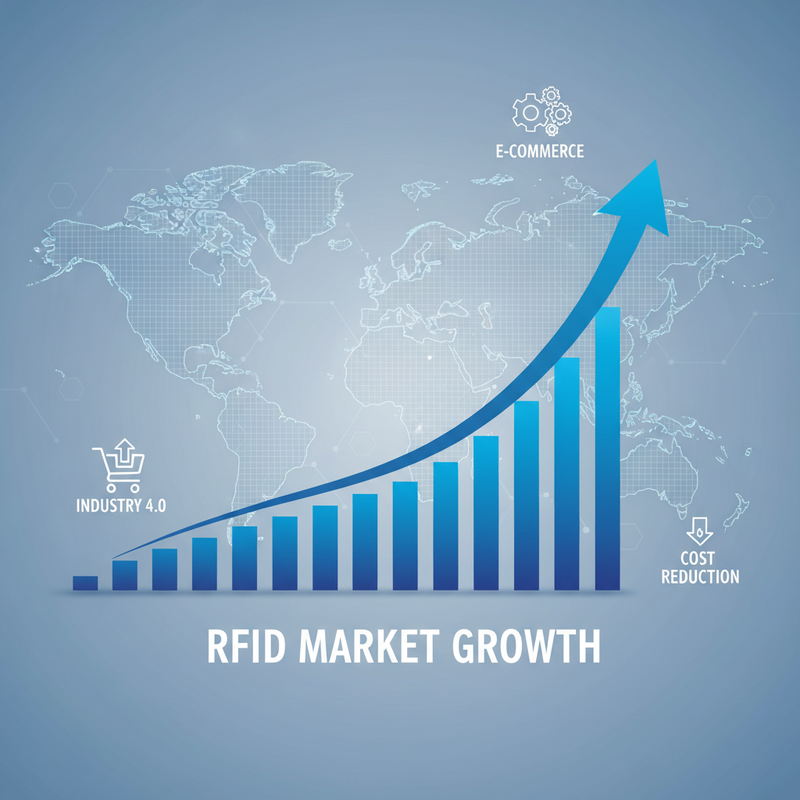
The global RFID market is experiencing robust growth, signaling a clear industry trend toward automation and enhanced supply chain visibility. Valued at approximately USD 13.9 billion in 2023, the market is projected to reach around USD 33.7 billion by 2032, maintaining a Compound Annual Growth Rate (CAGR) of 10.3%.
Key Market Drivers
Several factors are fueling this significant momentum across the logistics and supply chain sectors:
- E-commerce Boom: The surge in online shopping requires faster, more accurate fulfillment. Real-time inventory data has become a competitive necessity to meet consumer expectations for immediate delivery.
- Industry 4.0 & Digital Transformation: Heavy investment in "smart factories" and intelligent warehouses positions RFID as a foundational technology for digital infrastructure.
- Labor Challenges: Rising labor costs and persistent staffing shortages make RFID automation an attractive solution for reducing operational expenses and ensuring continuity.
- End-to-End Visibility: Businesses require granular insights to improve supply chain resilience, respond to disruptions, and enhance customer satisfaction.
- Falling Component Costs: The continuous decrease in the price of tags and readers has lowered the barrier to entry, making the technology accessible to a wider range of businesses.
Regional and Competitive Landscape
While North America and Europe currently lead in adoption due to established infrastructures, the Asia-Pacific region is poised for the highest growth, driven by manufacturing hubs and expanding e-commerce markets in China and India.
The industry ecosystem consists of several specialized players:
- Tag & Chip Manufacturers: Leading innovators include Avery Dennison, Impinj, NXP Semiconductors, Alien Technology, HID Global, and Confidex.
- Reader Manufacturers: Major contributors to data collection hardware include Zebra Technologies, Honeywell, Impinj, and Times-7.
- Software & Middleware Providers: Essential layers for translating raw data are provided by companies like Mojix, SML Group, Wiliot, and specialized platforms such as Zebra’s Savanna.
- System Integrators: Critical partners like Tag N Trak It and BlueStar specialize in designing and managing complete, seamless RFID solutions tailored to specific business needs.
Implementing RFID: Overcoming Challenges & Maximizing ROI
While the benefits of RFID are compelling, successful implementation requires careful planning and a strategic approach. Although initial investment costs and integration complexities were once significant barriers, advancements in software, more affordable hardware, and refined ROI models are making these solutions increasingly accessible.
Key Considerations for a Successful Deployment
- Define Clear Objectives: Start by identifying the specific challenges you aim to solve—such as inventory accuracy, throughput speed, labor costs, or supply chain visibility. Clear goals will dictate your technology selection and overall strategy.
- Adopt a Phased Approach: Rather than a "big bang" rollout, begin with a pilot project in a controlled area, such as receiving or cycle counting. This allows you to demonstrate ROI, refine processes, and make iterative improvements before scaling across the entire facility.
- Integrate with Existing Systems: Seamless connectivity with your Warehouse Management System (WMS) and Enterprise Resource Planning (ERP) is essential. RFID middleware serves as a critical bridge, ensuring data flows smoothly to provide a unified, real-time view of inventory via robust APIs.
- Develop a Tagging Strategy: Selecting the right tag depends on the item’s material (e.g., metal or liquid), required read range, and durability. Optimized tag placement and application methods are vital for maintaining reliable read rates.
- Partner with Experts: Engaging experienced system integrators and solution providers can significantly de-risk your deployment. Experts assist with site surveys, hardware selection, software customization, and post-implementation support to ensure the system is tuned to your unique operational needs.
- Focus on Training and Change Management: Comprehensive employee training is essential for high adoption rates. Communicating the purpose behind the technology and involving staff in the transition helps smooth the shift from manual to automated processes.
The ROI of RFID
A well-executed strategy results in substantial long-term value, including:
- Cost Savings: Significant reduction in labor hours and minimized inventory discrepancies.
- Operational Excellence: Fewer stockouts, higher order accuracy, and enhanced supply chain resilience.
- Competitive Advantage: A transparent, data-driven warehouse positioned for growth in an evolving market.

Conclusion
The future of warehouse operations is undeniably intelligent and automated, with UHF RFID at its forefront. By delivering unparalleled inventory accuracy, driving significant efficiency gains, and seamlessly integrating with emerging technologies, RFID is redefining the very essence of warehouse management. Embrace this transformative technology to gain real-time visibility, optimize your processes, and secure a competitive edge in 2025 and beyond. Ready to unlock the full potential of your warehouse? Contact Tag N Trak It today to discuss a tailored RFID solution for your operations.
- Transforming warehouse operations with RAIN RFID
- RFID is seeing an uptick in warehouses, spurred by automation
- Why Choose RFID for Your Warehouse
- The Future of RAIN RFID is NOW
- Drone-based RFID inventory in a Nutshell
- RFID Updates
- RFID Market Size To Reach USD 33.7 Billion By 2032, Growing At 10.3% CAGR: Polaris Market Research
- Mojix RFID for Supply Chain & Logistics
- 5 Considerations for an RFID Implementation Strategy
- SML RFID Solutions for Logistics and Supply Chain
- Decathlon and SML Join Forces to Drive RFID Adoption in Sports Retail
