The Power Pair: Complementary Strengths for Full Lifecycle Visibility
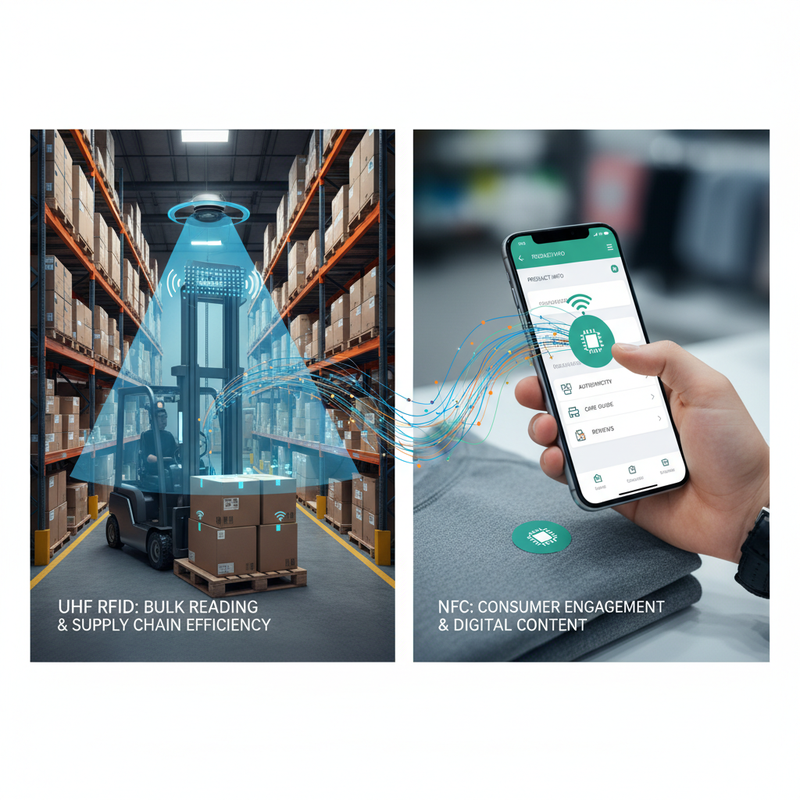
In the complex world of modern supply chains, no single technology offers a complete solution for item-level visibility. The integration of Ultra-High Frequency (UHF) RFID and Near Field Communication (NFC) creates a powerful, dual-technology approach that covers the entire product journey.
The Power of UHF RFID: Macro-Tracking
UHF RFID serves as the automated backbone for large-scale operations, providing broad-stroke visibility from the factory to the retail floor.
- Capabilities: Efficiently reads multiple items simultaneously over distances of several meters.
- Primary Use Cases: Warehouse inventory, inbound and outbound logistics, and real-time stock management.
- Key Benefit: Ensures unparalleled operational efficiency, often boosting inventory accuracy to 95–99%.
The Role of NFC: Micro-Interaction
While RFID handles the heavy lifting of logistics, NFC facilitates the "micro-interaction" once the product reaches the individual.
- Capabilities: Operates at a very short range (a few centimeters), requiring a deliberate "tap-to-interact" action.
- Primary Use Cases: Direct consumer engagement at the point of sale or post-purchase.
- Key Benefit: Acts as a direct portal for consumers to authenticate items, access specific product details, or engage with digital brand content via smartphone.
The Seamless Product Journey
This division of labor ensures an unbroken chain of data throughout a product’s life cycle:
- Factory & Distribution: UHF RFID tags are applied for initial serialization and mass tracking through the supply chain.
- Retail Environment: RFID provides constant visibility and high-accuracy inventory management.
- The Consumer: The integrated NFC tag takes over, bridging the physical and digital worlds to create a transparent, actionable experience for the end-user.
Elevating Brand Experience and Customer Engagement
In today’s competitive market, consumers crave more than just products; they seek transparency, authenticity, and a deeper connection with brands. Near Field Communication (NFC) technology serves as a powerful conduit for this engagement, transforming physical items into interactive digital touchpoints.
Elevating the Consumer Experience
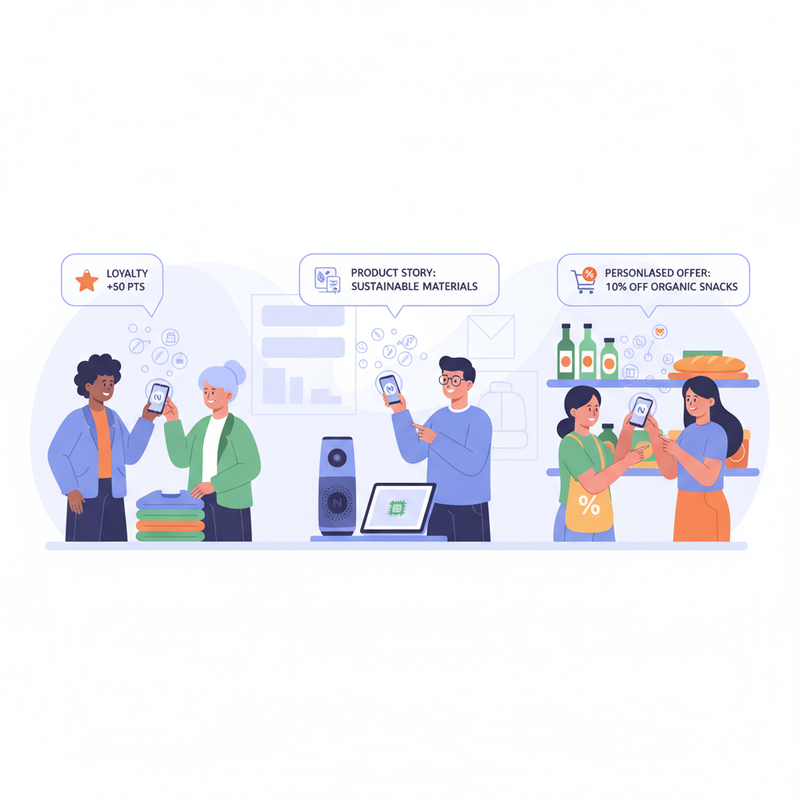
By embedding NFC tags into products or packaging, brands move beyond static labels to provide dynamic, real-time information through a simple smartphone tap.
- Luxury Apparel: A tag on a hangtag allows customers to verify authenticity, explore sustainable sourcing, watch styling videos, or join VIP loyalty programs.
- Wine & Spirits: A tap can reveal a vineyard's history, specific tasting notes, food pairing suggestions, or exclusive virtual event access.
- Post-Purchase Utility: NFC enables seamless warranty registration, one-touch reordering, and direct feedback channels.
Strategic Benefits for Brands
Beyond the customer experience, NFC provides a dual-sided value proposition:
- Emotional Connection: Shifts the relationship from a one-time transactional purchase to a rich, ongoing digital experience.
- Data Insights: Provides brands with invaluable data on consumer preferences and post-purchase behavior, allowing for hyper-targeted marketing.
- Market Leadership: Positions brands at the forefront of customer-centric innovation.
The Rise of Smart Packaging
The ability to connect physical products to the digital world is driving massive industry growth:
- Market Valuation: The global smart packaging market is projected to reach USD 73.18 billion by 2030.
- Growth Rate: The industry is exhibiting a robust CAGR of 14.9%.
- Driving Force: This surge underscores an increasing consumer demand for transparency and engaging, high-tech brand interactions.
Unwavering Authenticity: Fighting Fakes with Dual-Layer Security
The global counterfeit market poses a massive threat to industry revenue and consumer trust. By leveraging the synergy of UHF RFID and NFC, brands can establish a unique digital identity for every item, creating a robust defense against replication.
Supply Chain Integrity via UHF RFID
UHF RFID acts as the first line of defense by maintaining an indisputable chain of custody from the point of manufacture.
- End-to-End Tracking: Products are monitored at every stage—from the factory to the distribution center and onto the retail shelf.
- Diversion Detection: Brands can quickly identify if goods have been diverted or if unauthorized "fakes" have infiltrated legitimate channels.
- Advanced Security: Under the ISO/IEC 18000-63 standard, tags utilize cryptographic authentication to prevent cloning and include tamper-detection features to signal if a product has been compromised.
Consumer Verification via NFC
NFC adds a crucial, user-friendly layer of security that empowers the end-user to participate in the authentication process.
- Instant Authentication: Retailers and consumers can verify an individual item’s legitimacy with a simple smartphone tap at the point of purchase or at home.
- Secure Databases: NFC tags link directly to secure cloud databases or blockchain ledgers to provide verifiable proof of origin.
- User Empowerment: This "tap-to-verify" model builds immediate trust and ensures consumer safety.
A Multi-Faceted Defense
The combination of these two technologies creates a powerful deterrent against counterfeiting:
- For Brands: Protects reputation and revenue by securing the entire distribution network.
- For Consumers: Provides peace of mind and tools to ensure every purchase is authentic and trustworthy.
- Overall Impact: Establishes a transparent, secure lifecycle for products that is significantly harder for counterfeiters to penetrate.

Beyond Tracking: Operational Efficiency and Data-Driven Insights
The integration of UHF RFID and NFC creates an intelligent, holistic data pipeline that moves beyond simple asset tracking to provide deep, actionable insights and unparalleled operational efficiency.
Optimizing the Back-End: UHF RFID
UHF RFID is the engine for logistics and inventory management, automating the flow of goods with high precision.
- Operational Benefits: Enables rapid, automated inventory counts that reduce manual labor and minimize human error.
- Inventory Accuracy: Increases accuracy to 95–99%, a significant leap over traditional manual methods.
- Supply Chain Impact: Ensures real-time visibility across warehouses and stores, leading to better stock rotation, reduced waste, and enhanced on-shelf availability.
Capturing Consumer Insights: NFC
NFC adds the "last mile" of data by capturing how a product lives once it leaves the store shelf.
- Engagement Data: Every "tap" to register a warranty or access digital content provides insights into post-purchase behavior and product interest.
- Interaction Patterns: Brands can track how often and where consumers are engaging with their products.
- Direct Feedback: Creates a bridge for brands to understand consumer trends without middleman interference.
The Holistic Data Pipeline
By combining supply chain intelligence with consumer interaction data, businesses gain a comprehensive view of the entire product lifecycle.
- Informed Decision Making: Facilitates predictive analytics for demand forecasting and precise marketing optimization.
- Continuous Improvement: Supports data-driven refinements in product design, manufacturing, and customer service.
- Strategic Growth: Transforms raw data into a competitive asset, evidenced by the global RFID market’s projected growth from USD 13.9 billion in 2023 to USD 28.5 billion by 2030 (a 10.8% CAGR).

Navigating Regulations: The Digital Product Passport and Sustainability
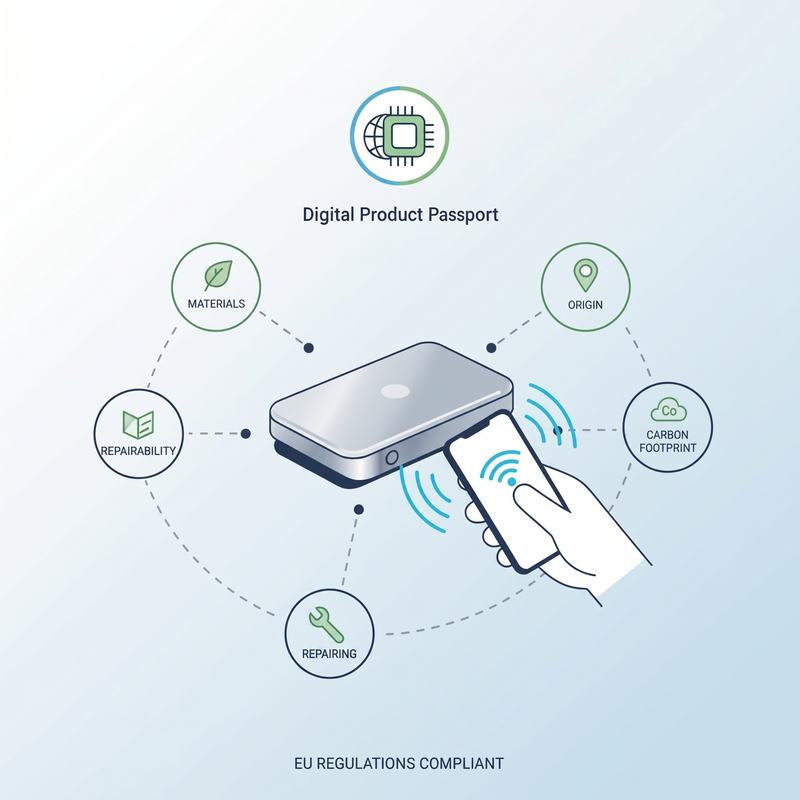
The global push for sustainability and circular economy principles is driving new regulatory mandates, most notably the European Union's Digital Product Passports (DPP). The combination of UHF RFID and NFC is becoming essential for brands to meet these requirements and demonstrate environmental responsibility.
Meeting Regulatory Mandates: The Digital Product Passport (DPP)
Under the Ecodesign for Sustainable Products Regulation (ESPR), products will soon require a physical identifier to provide access to comprehensive lifecycle data.
- Required Information: Details on origin, material composition, environmental impact, repairability, and end-of-life disposal instructions.
- Timeline: The first mandatory DPPs, specifically for batteries, are expected by 2027.
- The Link: GS1 Digital Link plays a key role by transforming traditional identifiers into web links accessible via a simple scan or NFC tap.
The Backend: Data Collection via UHF RFID
UHF RFID provides the foundational data necessary to populate a DPP by tracking a product's journey from the very beginning.
- Traceability: Tracks individual components and manufacturing processes across the entire supply chain.
- Industry Standards: Utilizes EPCglobal and GS1’s EPCIS to capture and share event data, ensuring end-to-end transparency.
- Operational Foundation: Manages the extensive data collection required to verify a product's sustainability claims.
The Frontend: Consumer Access via NFC
NFC serves as the intuitive interface that brings transparency directly to the stakeholder.
- Consumer Empowerment: A simple tap allows shoppers to make informed, sustainable purchasing decisions based on authenticated data.
- Circular Economy Support: Provides recyclers and repair technicians with instant access to specific instructions for dismantling or fixing products.
- Accessibility: Ensures that complex lifecycle data is easily retrieved by anyone with a smartphone, bridging the gap between a physical item and its digital history.
Strategic Impact
Integrating these technologies allows businesses to transform compliance into a competitive advantage:
- Regulatory Alignment: Ensures readiness for upcoming EU mandates.
- Brand Trust: Demonstrates a verifiable commitment to transparency and the environment.
- Efficiency: Facilitates the repair, reuse, and recycling processes necessary for a functional circular economy.
Conclusion
The convergence of UHF RFID and NFC represents a paradigm shift in how brands manage their products, engage with consumers, and uphold their commitment to authenticity and sustainability. This powerful dual-technology approach provides unparalleled supply chain visibility, transforms physical products into interactive digital touchpoints, and offers a robust defense against counterfeiting. As regulatory pressures intensify and consumer demand for transparency grows, embracing this synergy is no longer an option but a strategic imperative. Ready to future-proof your product lifecycle management and unlock new levels of brand engagement? Contact Tag N Trak It today to explore how our expertise in UHF RFID and NFC solutions can revolutionize your operations and connect you deeper with your customers.
- RFID and NFC: Creating Smarter Consumer Experiences
- Converging RFID & NFC for Consumer Engagement
- How Brands Connect with Consumers Using RFID and NFC
- Fighting Counterfeits with Product Digitalization
- Digital Product Passport and GS1 Standards
- NFC in Retail and Brands
- Authenticating Products With the New Gen2v2 Standard
- Smart Packaging Market Size, Share & Trends Analysis Report By Technology (RFID, NFC), By End-use (Food & Beverage, Automotive), By Application, By Region, And Segment Forecasts, 2023 - 2030
- RFID & NFC: The Perfect Union for a Modern Customer Experience
- GS1 Digital Link: Connecting Physical Products to the Digital World
- RFID Market by Product, Type, Frequency, Component, Application, and Region Global Forecast to 2030
- European Commission, DG GROW - Digital Product Passports
