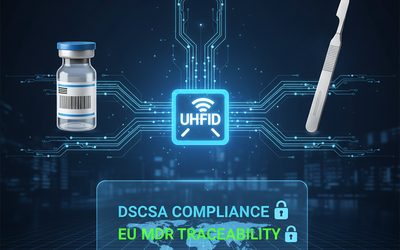
The Foundation of Circularity: End-to-End Product Lifecycle Traceability
At the heart of a circular economy lies the ability to track products and their components through every stage: from raw material sourcing and manufacturing to repair, remanufacturing, and responsible disposal.
The Digital Fingerprint
UHF RFID tags provide a unique, immutable digital identity for individual items known as an Electronic Product Code (EPC). This digital fingerprint enables comprehensive tracking, transforming opaque supply chains into transparent ecosystems. This granular traceability allows stakeholders to know not just where an item is, but its entire history and exact material composition.
Extending Product Lifespans
For industries adopting "product-as-a-service" models, RFID tracks usage and maintenance needs, effectively extending asset lifespans through timely intervention. For manufacturers, the technology identifies specific components suitable for remanufacturing, which significantly reduces the demand for virgin raw materials.
Closing the Loop
The ability to identify and route items correctly at their end-of-life is fundamental to minimizing waste across all sectors:
- Textiles: Knowing a garment's exact fiber blend via its RFID tag ensures it is properly sorted for recycling, preventing valuable materials from ending up in landfills.
- Authentication: RFID helps verify the authenticity of returned items, ensuring that only genuine components enter the refurbishment stream.
- Resource Recovery: By automating the identification of materials, companies can close the loop more efficiently, turning waste back into a valuable resource.
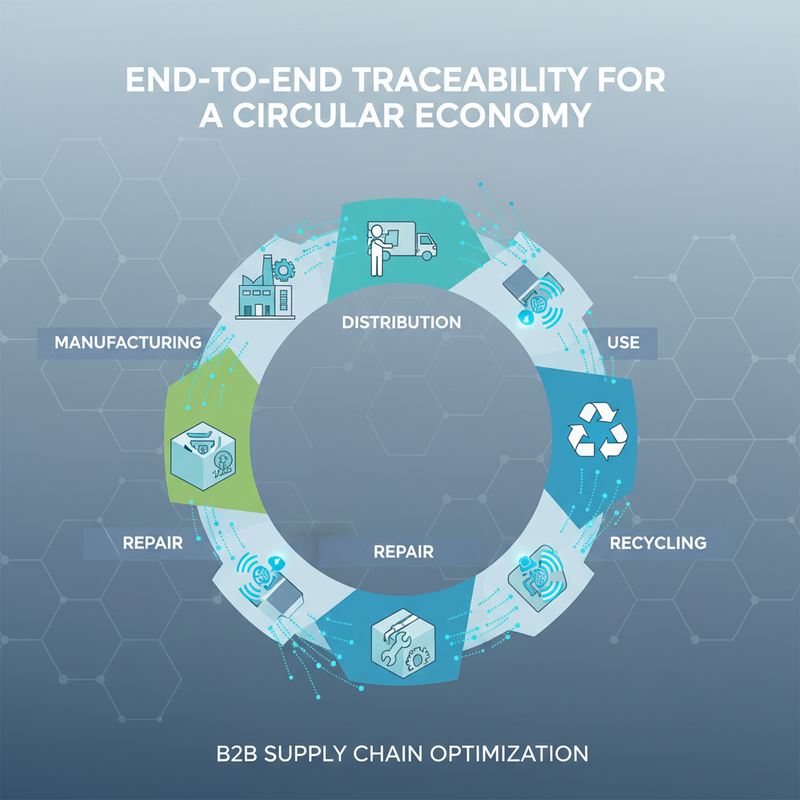
Elevating ESG Reporting with Verifiable Data & Regulatory Compliance
Credible sustainability reporting (ESG) demands accurate, verifiable data—a challenge often hindered by manual processes and estimations. UHF RFID systems automate data collection, capturing real-time information on product movements, usage patterns, return rates, and end-of-life disposition with unprecedented precision.
Enhancing Data Reliability
This automation drastically reduces human error and enhances the reliability of critical sustainability metrics. RFID data can feed directly into calculations for Scope 3 emissions—the indirect emissions from a company’s value chain—by precisely tracking transport routes and dwell times. It also quantifies:
- Waste generation and resource consumption.
- Circularity indicators, such as material recovery rates.
- Product lifecycles from manufacturing to disposal.
Navigating the Regulatory Landscape
The regulatory environment is rapidly evolving, most notably with the European Union’s Digital Product Passports (DPP). Set to become mandatory by 2026 for sectors like electronics, batteries, and textiles, these regulations will require products to carry digital identification and share extensive lifecycle data. UHF RFID is uniquely positioned to provide the granular, item-level data needed for these passports, ensuring compliance and enabling businesses to proactively meet legislative demands.
Standardized Interoperability
To function within complex circular economies, data must be shared across diverse stakeholders. Standardized protocols such as GS1 EPCIS (EPC Information Services) and GS1 Digital Link ensure seamless interoperability. This creates a common language for tracking products across global supply chains, making the dream of a fully transparent, sustainable economy a technical reality.

Optimizing Reverse Logistics and Maximizing Resource Recovery
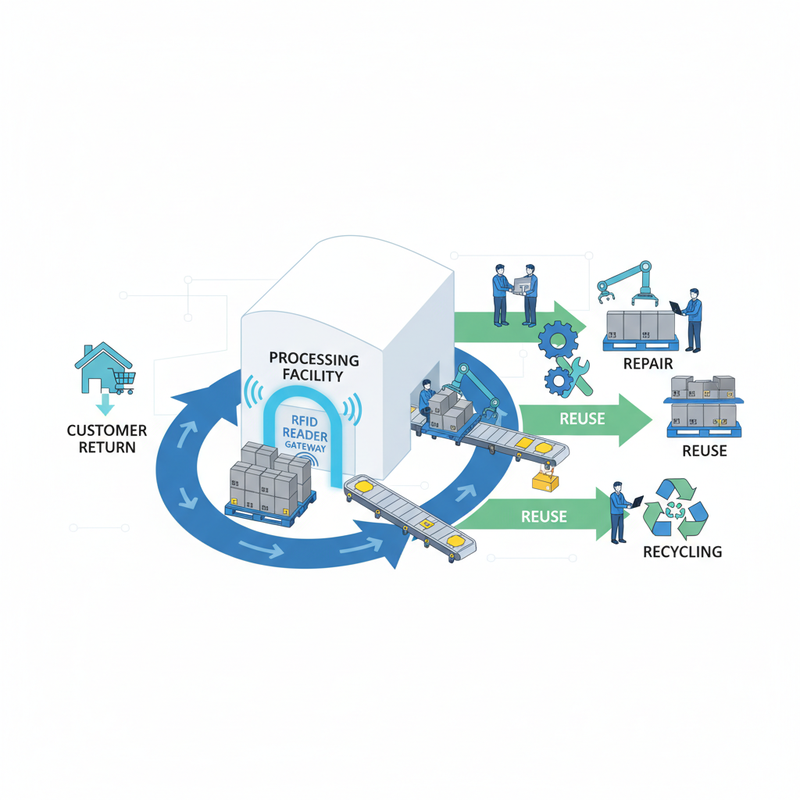
Reverse logistics—the process of moving goods from their final destination back through the supply chain for repair, reuse, or recycling—is often a costly and inefficient bottleneck. UHF RFID streamlines these operations by providing immediate and accurate identification of returned products.
Streamlining Returns and Material Recovery
As items enter a returns facility, an RFID scan instantly identifies their origin, condition, and ideal routing. This allows for rapid decision-making on whether a product should be sent for repair, refurbishment, resale, or specialized material recovery. Such efficiency significantly reduces logistics costs and minimizes unnecessary landfill waste.
Managing Reusable Transport Items (RTIs)
Beyond consumer goods, RFID is indispensable for managing Reusable Transport Items (RTIs), such as pallets, containers, and totes. These high-value assets are frequently lost or underutilized in complex supply chains. By tracking RTIs with RFID, companies can:
- Significantly improve utilization rates.
- Drastically reduce the need to purchase new inventory.
- Cut down on the associated carbon footprints of manufacturing and transport.
Operational and Environmental Impact
This data-driven approach not only yields substantial operational savings but also aligns directly with circular economy principles. By maximizing the lifespan and utility of critical resources, organizations can ensure that their logistics infrastructure is as sustainable as it is efficient.
Actionable Insights for Asset Tracking Professionals
For asset tracking professionals and supply chain managers, integrating UHF RFID is about more than simple data collection; it is about gaining actionable intelligence to drive tangible change. Here is how you can leverage this technology:
Establish Baselines and Monitor Progress
Implement RFID to accurately baseline current product flow, waste generation, and resource consumption. By continuously monitoring this data, you can track improvements over time and validate sustainability initiatives with empirical evidence rather than estimates.
Identify Circular Opportunities
Analyze RFID data to pinpoint products or components with high potential for reuse, repair, or remanufacturing. This granular visibility helps identify frequently returned items that are candidates for refurbishment or specific materials that can be efficiently harvested for recycling.
Optimize Asset Utilization
Beyond consumer products, use RFID to track high-value internal assets and Reusable Transport Items (RTIs). This allows organizations to reduce shrinkage, improve turnaround times, and extend the operational lifespan of critical equipment—effectively lowering capital expenditure and environmental impact.
Quantify Environmental Impact
Leverage real-time data to precisely calculate and report on specific sustainability Key Performance Indicators (KPIs). This includes tracking waste diversion rates, the percentage of recycled content in new products, and direct reductions in carbon footprints related to logistics and waste management.
Prepare for Digital Product Passports (DPP)
Begin piloting RFID integration with your data platforms now to stay ahead of the curve. This proactive step ensures your organization is prepared to meet impending DPP requirements, particularly in heavily regulated sectors like electronics, batteries, and textiles, helping you avoid future compliance penalties.

The Technical Edge: How UHF RFID Delivers on Sustainability
UHF RFID operates in the 860-960 MHz frequency band, offering versatile read ranges up to 10+ meters. This makes it ideal for tracking items across vast warehouses or through strategic chokepoints. The core components work seamlessly to create a robust tracking system:
Core Hardware Components
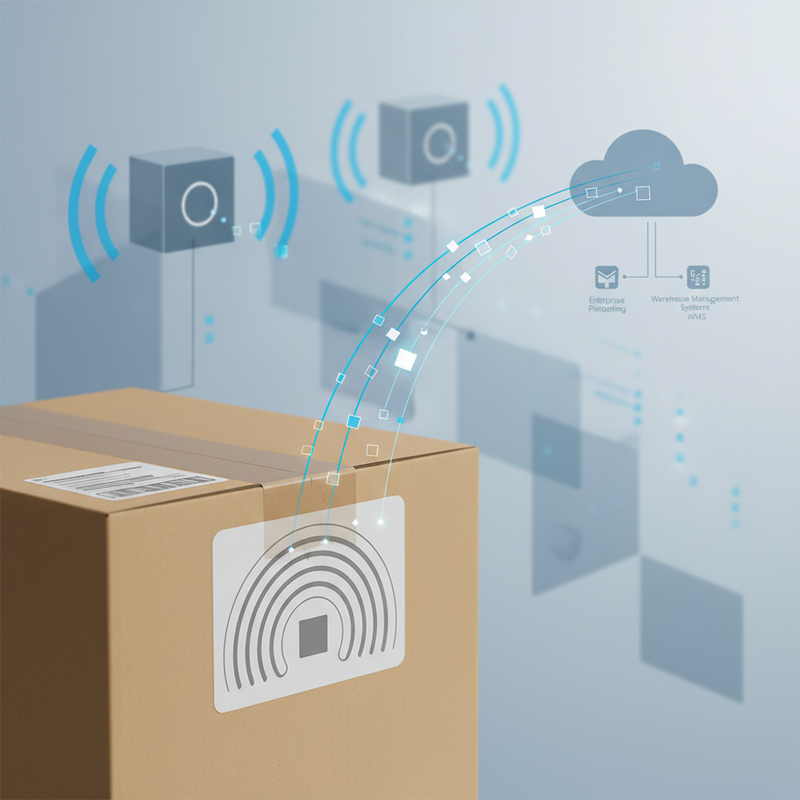
- RFID Tags: These small, cost-effective devices contain an antenna and a microchip. Passive UHF tags are battery-free, drawing power from the reader's radio waves to transmit their unique Electronic Product Code (EPC). Specialized tags are also available to withstand harsh environments, metal surfaces, or liquid-rich products.
- RFID Readers: Fixed readers are typically installed at strategic points like dock doors or production lines to automate data capture, while handheld readers provide flexibility for inventory audits and field operations.
- Antennas: These are connected to the readers, acting as the bridge by sending and receiving the RF signals that communicate with the tags.
Software and System Integration
RFID Software and Middleware serve as a crucial layer that processes raw tag reads and filters redundant data. It integrates seamlessly with existing enterprise systems such as ERP (Enterprise Resource Planning), WMS (Warehouse Management Systems), and PLM (Product Lifecycle Management), feeding essential data directly into sustainability reporting platforms.
Global Standards and Interoperability
Interoperability is ensured through rigorous global standards. ISO/IEC 18000-6C governs the air interface protocol, allowing hardware from different manufacturers to communicate effectively. Furthermore, GS1 standards like EPCIS provide a common language for exchanging item-level event data across the entire supply chain, which is vital for building comprehensive product histories.
The Future of Circularity
The GS1 Digital Link extends these capabilities by providing a single web link—accessible via RFID or QR codes—to a wealth of product information, including sustainability credentials, repair guides, and recycling instructions. This technical framework, especially when integrated with IoT platforms and blockchain for immutable data ledgers, positions UHF RFID as a cornerstone of future sustainable supply chains.
Industry in Action: Real-World Sustainability Success with RFID
UHF RFID is no longer just a theoretical solution; it is actively transforming industries worldwide by enabling practical circular economy initiatives and bolstering the accuracy of sustainability reporting.
Retail & Apparel
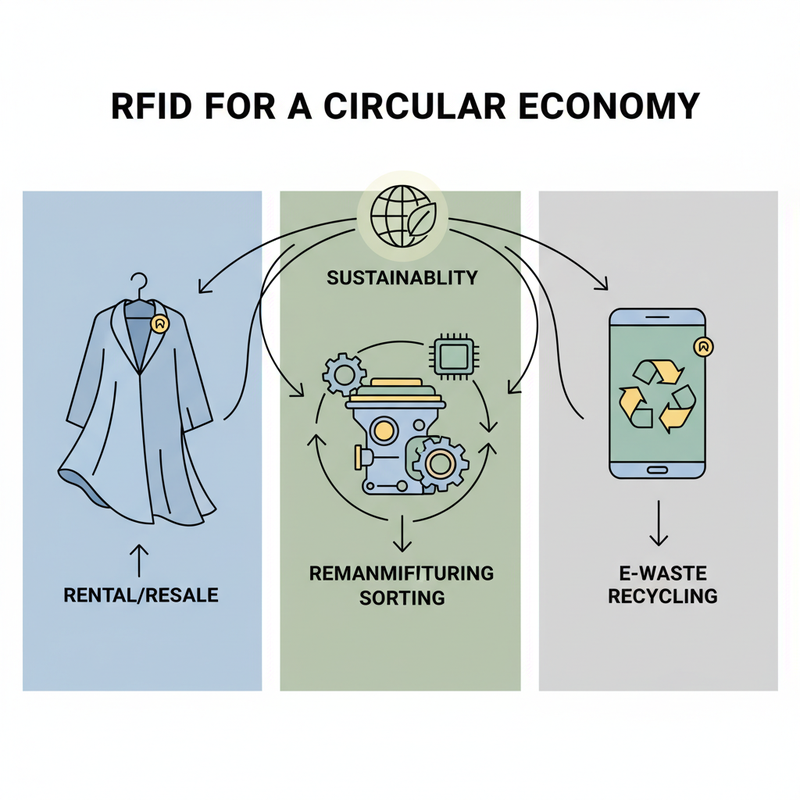
Brands are leveraging RFID to power circular fashion programs by tagging garments to track them for rental, resale, or recycling. When a customer returns an item, an RFID scan verifies authenticity, identifies material composition, and guides the item to the appropriate stream—whether that is repair, a resale platform, or a specialized recycling facility. This significantly boosts the success of circular loops and provides verifiable data for ESG reports on waste diversion. Furthermore, real-time inventory accuracy helps reduce overproduction and markdown waste.
Automotive
In the automotive sector, RFID tracks high-value components for remanufacturing, such as engines or transmissions. This ensures the correct parts are routed efficiently while providing data on origin and usage for regulatory compliance. Crucially, it manages fleets of reusable transport items (RTIs) between suppliers and assembly plants, drastically cutting down on single-use packaging and optimizing asset utilization.
Electronics
With growing pressure to manage Waste Electrical and Electronic Equipment (WEEE), RFID tags on devices or internal components can store vital information about hazardous substances and specific recycling instructions. This facilitates efficient disassembly and material recovery. For product-as-a-service models, RFID tracks the maintenance history of leased electronics, enabling predictive maintenance and extending product lifespans through refurbishment.
Logistics & Supply Chain
Beyond tracking containers, RFID provides precise data on product movements and dwell times, enabling the accurate calculation of transport-related Scope 3 emissions. This granular visibility allows companies to identify and optimize inefficient routes or modes of transport, directly reducing their carbon footprint.
Healthcare
High-value, reusable medical devices and surgical instruments are tracked through sterilization, use, and maintenance cycles. RFID ensures regulatory compliance, extends the lifespan of expensive equipment, and significantly reduces waste in clinical settings.
Conclusion
The future of business is inherently tied to sustainability. UHF RFID is not merely an asset tracking tool; it's a strategic imperative for any organization committed to building a robust circular economy and demonstrating genuine leadership in ESG reporting. By providing unparalleled traceability, verifiable data, and operational efficiencies, RFID empowers businesses to transform their supply chains, comply with evolving regulations, and drive a more sustainable future. Are you ready to unlock these benefits for your operations? Contact Tag N Trak It today to explore how our UHF RFID solutions can elevate your sustainability initiatives.
- Sustainability Reporting
- RAIN RFID and the Circular Economy
- RFID: Driving Sustainability and Circularity in Supply Chains
- The Role of RFID in Sustainability Reporting and Achieving ESG Goals
- Digital Product Passport
- How Digital Product Passports will impact your business
- Traceability
- Improve Supply Chain Sustainability with RFID Tracking
- RFID for Returnable Transport Items (RTIs): A Key to Sustainable Logistics
- RFID enabling Circular Economy
- RFID Frequencies
- RAIN RFID Tags
- What is RFID?
- What is RAIN RFID?
- RFID and Blockchain for Sustainable Supply Chains
- Sustainable Solutions for Retail - The Circular Economy
- RFID for Automotive
- Tracking Emissions with RFID
- RFID Market Size, Share & Trends Analysis Report, 2023 - 2032
- RFID Market - Global Forecast to 2028
- RAIN RFID Readers